Cemetery History
Preserving the history of Sioux Falls families and the legacy of Woodlawn Cemetery for over a century.
A Legacy Since 1905
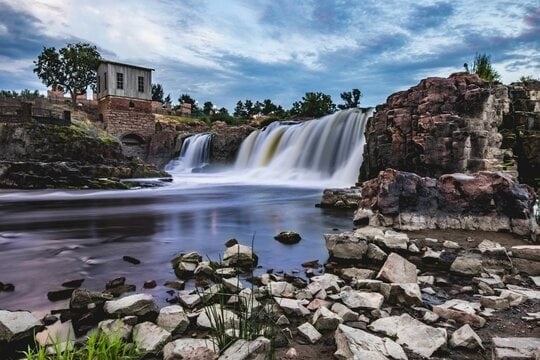
Since 1905, Woodlawn Cemetery has served the families of Sioux Falls and Minnehaha County with dignity, compassion, and a commitment to perpetual care. Founded by Richard F. Pettigrew and fellow civic leaders, the cemetery was established as a nonprofit corporation governed by its lot owners—a unique structure that continues to guide its mission today.
Over the decades, Woodlawn has grown from its original 70-acre property into one of the region’s most cherished places of remembrance. Through thoughtful expansion, careful preservation, and continual improvements to its grounds and facilities, the cemetery has evolved alongside the community it serves while honoring the vision of its founders.
Today, more than a century later, Woodlawn Cemetery remains dedicated to providing a peaceful resting place for generations of families while preserving the history, traditions, and stories that have shaped Sioux Falls since the early days of the twentieth century.
Milestones
Woodlawn Cemetery Founded
Woodlawn Cemetery was incorporated by Richard F. Pettigrew, Ulysses S. G. Cherry, and Charles O. Bailey as a perpetual, nonprofit cemetery governed by its lot owners.
Expansion
An additional ten acres were purchased, bringing the cemetery to its current 80-acre property.
Pettigrew Remembered
Founder Richard F. Pettigrew passed away after dedicating more than twenty years to Woodlawn’s growth.
New Entrances
Granite entrance piers were installed at both the 26th Street and 33rd Street entrances.
Office Constructed
A permanent office and maintenance building opened on the cemetery grounds.
St. Francis Statue
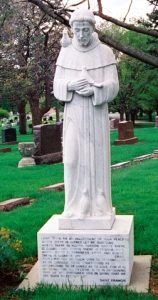
A life-size Carrara marble statue of St. Francis of Assisi was installed in the Crown Hill section.
First Columbarium
Woodlawn added its first 96-niche columbarium to serve the growing number of cremation interments.
A Memorable Farewell
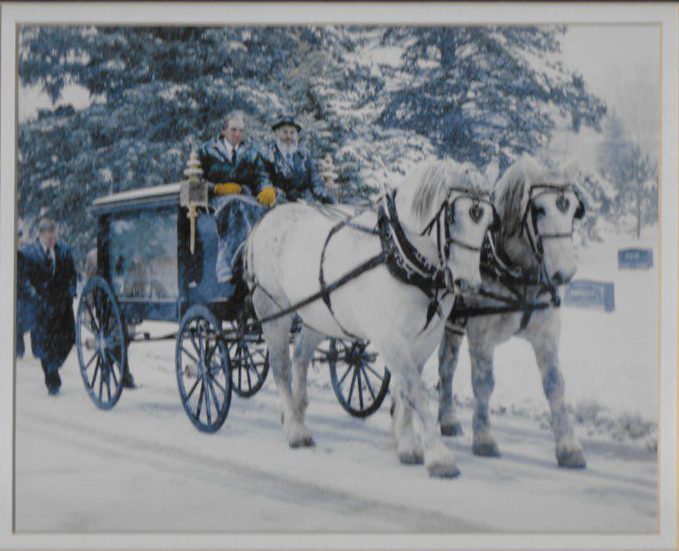
Kenneth L. Tschetter was honored with a horse-drawn funeral procession through the cemetery.
A Century of Service
More than 100 years after its founding, Woodlawn Cemetery continues to provide perpetual care while preserving the history and memories of generations of families.
The Full History
The Founding of Woodlawn Cemetery (1905)
From its founding in 1905, Woodlawn Cemetery has served the families of Sioux Falls and Minnehaha County during their time of need.
Richard F. Pettigrew, together with Ulysses S. G. Cherry and Charles O. Bailey, formed the corporation known as The Woodlawn Cemetery under the laws of the State of South Dakota. B. H. Lien and P. F. Sherman joined the three incorporators as the cemetery’s original Board of Directors.
The founding documents established several principles that continue to define Woodlawn Cemetery today. The cemetery was created as a perpetual corporation with no capital stock and is governed entirely by its lot owners. Only lot owners are eligible to serve on the Board of Directors.
The original deeds also required that twenty-five percent of all lot sale proceeds be placed into a perpetual care fund. The income generated from this fund ensures that the cemetery will continue to be maintained and cared for long after every lot has been sold.
Richard F. Pettigrew’s Vision
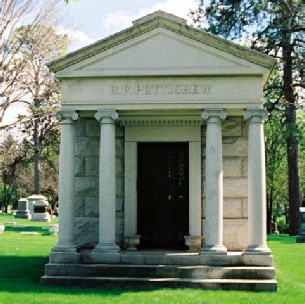
Richard F. Pettigrew first came to Dakota Territory in 1869 as the head of a land survey crew. After attending law school in Wisconsin, he returned to Sioux Falls in 1870, where he established his law practice and became deeply involved in civic and political affairs.
He served as a territorial delegate to Congress beginning in 1880 and played an important role in South Dakota’s path to statehood. When South Dakota became the nation’s 40th state in 1889, Pettigrew became one of its first two United States Senators.
Following two terms in the Senate, Pettigrew returned to Sioux Falls to practice law and continue his civic work. His service as an officer of the Rosehill Cemetery Association in New York inspired him to establish a modern cemetery for the growing Sioux Falls community.
When a 70-acre tract on the southeast edge of the city became available, Pettigrew purchased it with his own funds for $8,750. As cemetery lot sales increased, the association gradually repaid the purchase price and interest. In 1922, an additional ten acres were acquired, creating the 80-acre property that continues to serve the community today.
Growth in the Early Years
Woodlawn Cemetery experienced steady growth during its first decades.
By November 1911, 82 family lots and 26 single grave spaces had been sold. During those early years, burial space was priced at thirty cents per square foot. Grave spaces were also provided without charge to the South Dakota Children’s Home, which had used thirteen spaces by 1911.
Throughout the 1910s, the cemetery’s financial position strengthened considerably. The Board established a dedicated Perpetual Care account, invested in bonds and securities, and anticipated future growth by planning gradual increases in lot prices.
Honoring a Lasting Legacy
Richard F. Pettigrew passed away in 1926 after more than two decades of guiding Woodlawn Cemetery’s development. His vision continues to shape the cemetery today.
One of his most enduring contributions is the distinctive entrance arch at 26th Street, constructed from petrified wood gathered from the forests of Arizona. It remains a lasting tribute to the cemetery’s founder.
In 1932, the Board further enhanced the cemetery’s entrances with the installation of granite piers crafted by the Jasper Granite Company of Jasper, Minnesota. These entrances continue to welcome visitors today.
Expansion and Modernization
Woodlawn Cemetery continued to grow alongside the City of Sioux Falls throughout the second half of the twentieth century.
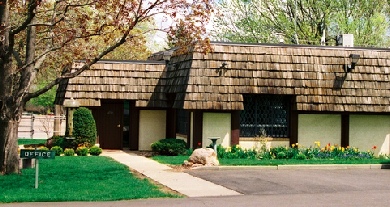
In 1954, the cemetery opened its first permanent office and maintenance building on the cemetery grounds after operating for more than fifty years from several downtown locations. The facility improved daily operations and made services more convenient for both visitors and staff.
As Sioux Falls expanded during the 1960s and 1970s, Woodlawn opened six new cemetery sections while introducing pre-need purchasing and installment payment plans. Following the passing of longtime secretary H. W. Stellner in 1970, the Board created the position of Cemetery Manager to oversee daily operations.
The office building was expanded and renovated in 1972 to provide additional secure storage for records and improve the appearance of the facility.
Beautification and Preservation
Woodlawn has continually invested in preserving both the beauty of its grounds and the experience of those who visit.
In 1973, a life-size Carrara marble statue of St. Francis of Assisi was donated by Maxine Cook in memory of her parents. The statue remains one of the cemetery’s most recognizable landmarks, and in 1989 the words of the Prayer of St. Francis were added to its marble base.
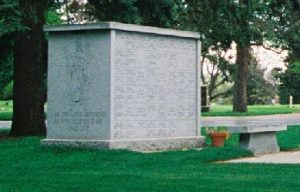
During the 1980s, Woodlawn expanded its services to meet changing family preferences by installing its first 96-niche columbarium for cremated remains. The cemetery also invested heavily in road improvements, tree replacement, future expansion planning, landscaping, and historical preservation while continuing to strengthen its Perpetual Care Fund through generous gifts from lot owners and supporters.
Throughout the 1990s, additional improvements included surveying new sections, extending roads, purchasing new maintenance equipment, planting replacement trees, and adding a second columbarium in 1998. The first Memorial Day hospitality tent was also introduced in 1990, beginning a tradition of welcoming visitors during the holiday.
Continuing the Tradition
One particularly memorable service took place in November 2001, when Kenneth L. Tschetter was honored with a horse-drawn funeral procession through Woodlawn Cemetery. Pulled by the family’s dapple gray Percheron horses, the hearse traveled the cemetery’s peaceful roads during a light snowfall, creating a lasting tribute that reflected both tradition and dignity.
Today, Woodlawn Cemetery continues to fulfill the vision established by its founders more than a century ago. Through perpetual care, thoughtful stewardship, and a commitment to preserving the history of Sioux Falls, Woodlawn remains a place of remembrance, reflection, and lasting service for generations to come.
Historical Highlights
Woodlawn Cemetery’s commitment to perpetual care and thoughtful stewardship was reflected in numerous improvements made throughout the 1980s. During this period, the cemetery invested heavily in maintaining its grounds, preserving its history, and preparing for future generations.
- Approximately $65,000 was invested in maintaining and improving cemetery roads.
- Nearly 150 aging trees were removed and replaced with more than 300 new trees, many of which were grown in Woodlawn’s own tree nursery.
- A condensed financial statement was prepared by the Board of Directors and distributed to lot owners.
- Historically significant Pettigrew and Beebe papers were donated to the Siouxland Heritage Museums following research conducted for a historical brochure about the cemetery.
- Future expansion areas in the southern portion of the cemetery were surveyed, plotted, and named.
- Woodlawn partnered with the City of Sioux Falls during the widening of the intersection at 26th Street and Cliff Avenue, deeding a portion of cemetery property for the project while regrading the landscape and reconstructing a matching granite entrance pier to preserve the cemetery’s historic appearance.
Current Staff & Board Members
Board of Directors
Thomas F. Benz
Board Member
William J. “Bill” Hoskins
Board Member
William D. “Duff” Robinson
Board Member
Linda K. Baker
Board Member
James L. Hoy
Board Member
Cemetery Staff
Michelle Millette
Director
Glen Healy
Superintendent